Pregnancy brings significant changes to your body, with your nutritional needs evolving to support both your health and your baby's development.
2 nutrients worth understanding are Choline and Methyl-Folate. From supporting brain and nervous system development to contributing to essential cellular processes, both play important roles throughout pregnancy. But what exactly do they do, how do they work together, and why should they be part of the conversation when it comes to prenatal nutrition?
What is Choline and why is it so important during pregnancy?
When we think about pregnancy nutrition, certain nutrients tend to get most of the attention. Choline, however, is one that deserves a much bigger place in the conversation.
Choline is an essential nutrient that supports several important functions in the body, particularly during pregnancy when your baby's development is progressing rapidly. One of its most important roles is supporting the development of the brain and nervous system.
Choline is also involved in the production of phospholipids, which form a key part of cell membranes and help maintain the structure and function of cells throughout the body. As your baby grows, these processes play an important role in healthy cellular development.
Despite its importance, choline is often overlooked when discussing prenatal nutrition. Research suggests that many women do not meet recommended daily choline intakes through diet alone, making it an important nutrient to consider when planning your pregnancy nutrition.
Where Can You Find Choline?
Choline is naturally found in a variety of foods, making it possible to incorporate into your everyday diet. Some of the richest dietary sources include:
-
Eggs, particularly egg yolks.
-
Fish and poultry.
-
Dairy products.
-
Broccoli and Brussels sprouts.
-
Soybeans and other legumes.
Eating a varied and balanced diet can help contribute towards your daily choline intake, particularly when you include a range of these foods.
Methyl-Folate: understanding the active form of folic acid
Folic Acid is probably one of the first nutrients that comes to mind when discussing pregnancy. Its importance is well established, particularly during the early stages of pregnancy when your baby's brain and spinal cord are beginning to develop.
Folic Acid, also known as vitamin B9, plays an essential role in DNA synthesis and normal cell division. These processes are particularly important during pregnancy, when cells are growing and developing at an extraordinary rate.
Methyl-Folate, also known as 5-MTHF, is the biologically active form of vitamin B9 that circulates naturally in the body. One of the reasons Methyl-Folate is an important ingredient to understand is its relationship with the MTHFR gene. The MTHFR gene provides instructions for producing an enzyme that helps the body convert folate into its active form, 5-MTHF (Methyl-Folate). Some people carry common variations in the MTHFR gene, which can make this conversion less efficient. By including Methyl-Folate in our formulas, we provide this biologically active form of vitamin B9 directly, without relying on the body to carry out that particular conversion step.
Why is Methyl-Folate so important during pregnancy?
One of methyl-folate's most important roles is supporting the development of your baby's neural tube, which eventually forms the brain and spinal cord.
The neural tube develops during the very early stages of pregnancy, often before many women even know they are expecting. Adequate intake before conception and during early pregnancy is proven to help reduce the risk of neural tube defects, including spina bifida.
Why are Choline and Methyl-Folate both important during pregnancy?
Although Choline and Methyl-Folate have distinct functions, they are connected through several important metabolic processes within the body.
Both play a role in what is known as one-carbon metabolism. This is a series of interconnected reactions that help the body transfer single-carbon units, supporting essential processes such as DNA synthesis, cellular growth and methylation.
Choline can be converted into betaine, which acts as a methyl donor and helps regulate homocysteine levels. Methyl-Folate also contributes to these pathways, supporting the body's natural methylation processes.
While they work in different ways, their complementary roles highlight the importance of looking at pregnancy nutrition as a whole. Rather than focusing on individual nutrients in isolation, understanding how they work together can help inform more considered nutritional choices throughout pregnancy.
Supporting Your Pregnancy Nutrition with Gigi's Advanced Pre-Conception & Pregnancy Blend
At Gigi, we believe pregnancy nutrition deserves thoughtful consideration at every stage of the journey.
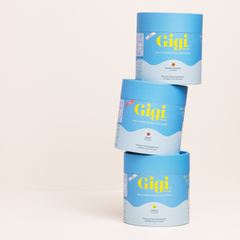
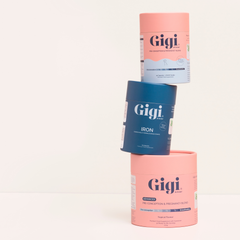
Our Advanced Pre-Conception & Pregnancy Blend has been formulated with 23 clinically backed nutrients, including ZeaLutein® antioxidants, to provide 10x more nutritional support* from trying to conceive through pregnancy, postpartum and breastfeeding.
With carefully selected nutrients, including Choline and Methyl-Folate, our Advanced Blend has been developed to support your changing nutritional needs throughout every stage of your journey. Because when it comes to pregnancy nutrition, every nutrient has a role to play.






 Lisa Hughes
5 min read